


10 Black Voices of Medway 2026 Preserving Heritage and Inviting TEN 2027 Participants

Some histories survive because they are written down. Others survive because someone remembers a voice, a kitchen table, a photograph, a migration story, a song, a street, a shop, a church, a school, a dockyard shift, a moment of welcome, or a moment of resistance.
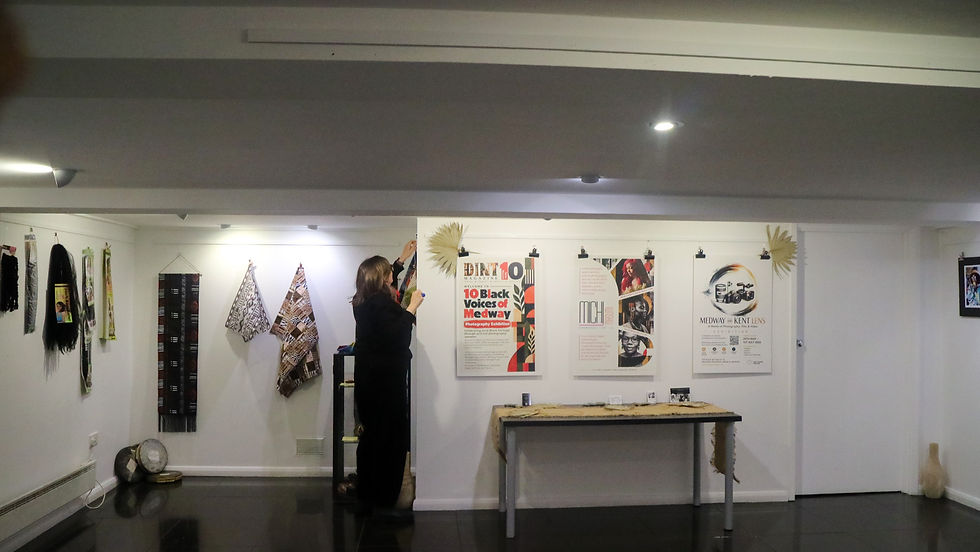
The TENS project begins from that human place. 10 Black Voices of Medway 2026, led by artist and cultural producer Michi Masumi, sets out to record, photograph, and share the lived experiences of Black people connected to Medway. It is the opening chapter in an ambitious journey to document 100 Black voices between 2026 and 2036.
This work matters because local history is never complete when whole communities are left as footnotes. Medway has long been shaped by movement, labour, creativity, family life, faith, education, and public service. Black residents have been part of that story, yet their experiences have not always been held with the care, visibility, or permanence they deserve.
TENS responds by creating a living archive through oral history, portrait photography, and storytelling. It asks a simple but powerful question: who gets remembered, and how?
Personal memories are central to preserving local heritage.

TENS begins with ten voices and a wider vision.
The first chapter, 10 Black Voices of Medway 2026, focuses on ten people whose lives, memories, and experiences help tell a wider story of Black history in Medway. The title is direct, but the idea behind it is expansive.
Each participant represents more than a single biography. Their stories may touch on family roots, migration, work, activism, education, friendship, food, music, art, faith, and belonging. Some may speak about arriving in Medway. Others may speak about being born and raised there. Some may connect their local life to African and Caribbean heritage. Others may describe how identity shifts across generations.
Together, these voices help build a record of Black British cultural heritage at a local level. That local focus is important. National histories often use broad labels and large events. Community histories show how those forces are lived day by day.
Michi Masumi’s leadership gives the project a strong artistic and social frame. The work is not only about collecting information. It is about creating a dignified space where people can be seen, heard, and remembered with care. That care is vital in heritage projects, especially when working with communities whose stories have too often been extracted, simplified, or overlooked.
The project also carries a sense of invitation. TENS is not a closed archive for specialists alone. It is a public cultural project that connects community members, historians, artists, learners, educators, and heritage workers. It values lived experience as knowledge.

Oral history protects the texture of lived experience.
Oral history is one of the most powerful ways to preserve lives that may not appear in official records. Census data, newspapers, council papers, and institutional archives can tell part of a story. They can show dates, addresses, roles, and public decisions. But they rarely capture tone, memory, humour, grief, pride, or the meaning people give to their own lives.
A recorded interview can hold those details. I decided to add photographs to the 'Ten Black Voices of Medway' project.
It can preserve the way someone describes their first home in Medway, the music they heard growing up, the advice they received from a parent, the first workplace where they felt accepted, or the school experience that shaped their sense of self. It can also record harder memories, including racism, exclusion, loss, and the labour of making a place home.
For researchers, oral history offers rich material. For families, it can become a treasured record. For communities, it can create recognition. For younger generations, it can offer a link to people and experiences that might otherwise feel distant.
Medway oral history also helps challenge the idea that Black history belongs only to large cities or national milestones. Black history is present in towns, neighbourhoods, high streets, classrooms, churches, arts spaces, sports clubs, workplaces, and homes. Projects like TENS make those local connections visible.
A strong oral history project does not treat people as subjects to be studied from a distance. It listens. It allows people to shape their own story. It honours pauses, emotion, contradiction, and memory’s human quality. That approach is central to TENS.
Portrait photography adds presence to the archive.

Haynes,
A voice can carry memory. A portrait can hold presence.
Portrait photography plays a key role in the TENS project because it gives each participant a visual place in the archive. A portrait is not just an illustration of an interview. It is a statement that this person matters, this life has value, and this story belongs in the public record.
Good portraiture can do what written records often cannot. It can convey confidence, softness, age, style, vulnerability, strength, and personality in a single frame. When paired with oral testimony, it creates a fuller form of remembrance.
The link between archival photography and oral history is especially powerful for communities whose images have often been controlled by outsiders. Historically, Black people have not always been photographed on their own terms. Images have been used to stereotype, exoticise, or reduce. A careful community-led portrait project can work against that history by giving participants agency, dignity, and visibility.
In TENS, photography becomes part of the storytelling process. The portrait does not replace the voice. It stands beside it. Together, they create a record that can be shared in exhibitions, learning resources, community events, and archives.
This matters in academic and public heritage settings alike. Images help people connect quickly, but they also prompt deeper questions. Who is represented? Who is missing? Who has been able to keep family photographs? Which images have survived? Which lives have remained unseen?
A portrait can become an entry point into a wider conversation about memory, identity, and care.

Storytelling turns records into shared heritage.
Archives can preserve material, but storytelling helps people feel why it matters.
The TENS project brings oral history and portrait photography together through community storytelling. This means the work can move beyond storage and become part of local learning, cultural programming, and public memory.
Storytelling allows a participant’s experience to speak across different spaces. A recorded memory might become part of an exhibition. A portrait might prompt a school discussion. A short story extract might help a family talk about migration, identity, or belonging. A community event might bring elders and younger people into conversation.
This is where TENS has the potential to become more than a documentation project. It can become a bridge between generations.
For younger people in Medway, hearing Black residents speak in their own words can help build pride and context. It can show that heritage is not something far away, held only in museums or textbooks. It lives in relatives, neighbours, teachers, artists, faith leaders, carers, shop owners, volunteers, and friends.
For older participants, being invited to share their story can be a meaningful act of recognition. It can say, clearly and publicly, that their life adds to the history of the place.
For cultural and heritage professionals, the project offers a model of community-rooted practice. It shows how archives can be built through trust, artistic care, and collaboration. It also shows why representation is not only about who appears in a final display. It is about who is invited to speak, who shapes the process, and who has access to the results.

The journey to 100 voices creates a long-term community record.
The first ten voices are only the beginning. TENS sets out a nine-year journey to document 100 Black voices in Medway from 2026 to 2036. That long view gives the project unusual depth.
Many heritage projects are short-term. They gather material, hold an event, produce an exhibition, and then end. TENS has a wider horizon. By spreading the work across years, the project can create a layered record of Black life in Medway across different ages, backgrounds, and experiences.
A long-term project can also build trust. Trust matters when asking people to share personal memories. Some stories may be joyful and easy to tell. Others may involve painful experiences or family histories that carry emotional weight. A patient approach gives people time to understand the project, ask questions, and decide how they want to take part.
The aim of 100 voices also creates room for diversity within Black communities. No single story can represent everyone. Medway’s Black communities include people with different national, cultural, religious, linguistic, and generational backgrounds. Some families may trace connections to the Caribbean. Others may connect to countries across Africa. Some may have mixed heritage. Some may have lived in Medway for decades, while others may be more recent residents.
Documenting 100 voices allows the archive to avoid flattening identity. It can hold difference, complexity, and change.
This is especially valuable for future researchers. By 2036, the collection could offer a significant resource for those studying Black history in Medway, community memory, migration, local identity, race, art, photography, and heritage practice. It could also serve families and residents who simply want to understand the people who helped shape the area.
Projects like this remind us that archives are not neutral containers. They are built through choices. TENS chooses to place Black lived experience at the centre.
Support from local and national heritage partners matters
TENS is supported by the Medway Heritage Place Project, Medway Council, and the National Lottery Heritage Fund. That support matters because community heritage needs more than goodwill. It needs time, resources, skills, access, and care.
The Medway Heritage Place Project provides an important local framework for recognising and sharing the area’s heritage. Medway Council’s involvement helps connect the work to civic life and local cultural development. The National Lottery Heritage Fund’s support reflects the wider public value of preserving underrepresented histories.
This kind of backing can help a project reach beyond a small circle. It can support recording, photography, engagement, events, archiving, and public access. It can also signal that Black heritage is not a side theme. It is part of Medway’s shared history.
Funding and institutional support do not replace community ownership. The strength of TENS rests in the people who share their stories and the care with which those stories are held. But support from heritage partners can help make sure the work lasts, reaches people, and gains the recognition it deserves.
For the National Lottery Heritage Fund, projects like this also show the public value of lottery-funded heritage work. Heritage is not only castles, collections, and monuments. It is memory, voice, family, place, and the everyday lives that shape communities.


The TEN 2027 call-out invites the next participants
After the 2026 chapter, the TEN 2027 call- out will invite the next group of participants to join the project. This is a key moment for anyone connected to Medway who feels their story, or the story of
someone they know, could form part of this growing archive.
Interested individuals can participate by expressing interest in being interviewed and photographed for a future TENS chapter. Community nominations may also play a useful role, especially where elders, family members, or local contributors may not put themselves forward but have important experiences to share.
The project will be especially relevant to people who:
Identify as Black or have African, Caribbean, Black British, or mixed Black heritage
Have a meaningful connection to Medway through residence, work, study, family, creativity, faith, community life, or service
Are willing to take part in an oral history interview
Are open to being photographed as part of the project
Want to help preserve community memory for future generations
Participation is not limited to people with public profiles. The value of TENS lies in everyday experience as well as recognised achievement. A grandparent’s memories, a young artist’s reflections, a community worker’s journey, or a family’s story of making a home in Medway can all carry historical value.
Community groups, schools, cultural organisations, faith groups, and local networks can also support the call-out by sharing information, encouraging nominations, and helping reach people who may not usually engage with heritage projects.
If you are interested in TEN 2027, look out for the official call-out from the project team and local heritage partners. Prepare by thinking about the stories, objects, photographs, places, and memories that matter to you. You do not need to have a polished life story. You only need a willingness to share honestly and be part of a collective record.
Why this project deserves community attention
TENS arrives at a time when questions of heritage, representation, and public memory are being asked with new urgency. Across Britain and beyond, communities are looking again at whose histories have been preserved and whose have been ignored.
Medway has an opportunity to build something lasting. Not a one-off celebration, but an archive of voices that can grow in depth and value over time.
The combination of oral history, portraiture, and storytelling gives the project strength. It records how people sound, how they present themselves, what they remember, and what they choose to pass on. It creates material that can be used by families, educators, artists, researchers, and future generations.
Most of all, it shows that heritage is made by people. It is made when someone agrees to sit down and speak. It is made when a photographer frames a portrait with care. It is made when a community listens.
10 Black Voices of Medway 2026 opens the door.
TEN 2027 asks who will step through next. The answer will shape the archive, and with it, the way Medway remembers itself. To register, email: msmichimasumi@gmail.com


Comments