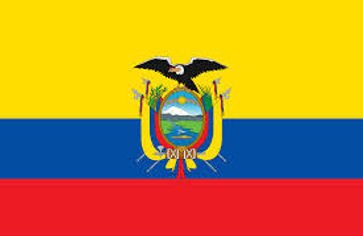
.png)


.png)


Art Credit: Michi Masumi. BA.MA
🌍 Global Cultural Heritage Network (GCHN)
The Cultural Heritage Arm of CADA, within The Benjamin Zephaniah Library
The GCHN documents, celebrates, and shares African Diaspora creativity, heritage, identity, and cultural practice across the world through interviews, artist profiles, photography, oral histories, articles, exhibitions, and digital collections.
🌍 🇪🇨 Ecuador Collection
The Cultural Heritage Arm of CADA, within The Benjamin Zephaniah Library
International Collection
-
Afro-Ecuadorian artists
-
Photography
-
Poetry
-
Music
-
Food heritage
-
Interviews
-
Cultural articles
-
Oral histories
-
Artist opportunities
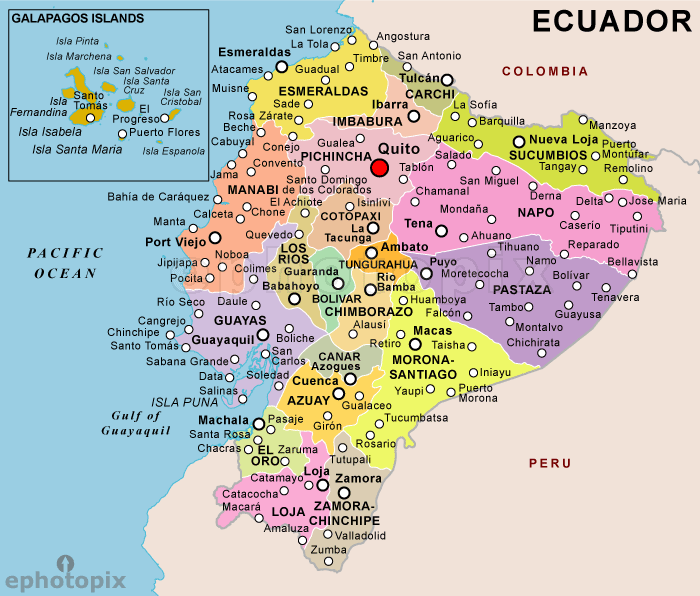
Map Credit: Wikipedia -
Hyerakk, CC BY-SA 4.0 <https://creativecommons.org/licenses/by-sa/4.0>, via Wikimedia Commons
🎨 Afro-Ecuadorian Artists
Finding extensive online portfolios for specific historical Afro-Ecuadorian artists can be challenging, but here are key figures and resources to begin your exploration:
Wladimir Viteri (Painter & Sculptor):
A contemporary artist known as "The Artist of the Afro-Ecuadorian People." His work explicitly focuses on the culture and heritage of Afro-Ecuadorian communities.
-
Nelson Estupiñán Bass (Writer & Poet):
A foundational literary figure born in Esmeraldas. His work, such as When the Guayacanes Bloomed (1954), is essential for understanding the Afro-Ecuadorian historical narrative and struggle for identity.
-
Efraín Andrade Viteri
Born in Esmeraldas, the heart of Afro‑Ecuadorian culture. Known for painting coastal and Afro‑descendant life.
🎨 Afro‑Ecuadorian Cultural Context
Afro‑Ecuadorians are concentrated in Esmeraldas and the Chota Valley, known for:
-
Marimba music (UNESCO-recognised intangible heritage)
-
Bomba dance
-
Rich oral traditions
-
Distinctive visual arts reflecting coastal life, spirituality, and resistance
While global documentation is limited, artists like Efraín Andrade Viteri and cultural custodians across Esmeraldas contribute significantly to Ecuador’s Afro‑Latino heritage.
For more information on Afro-Ecuadorians, please visit our
🌍 🇪🇨 Ecuador — A Full Country Overview
Identity & Geography
-
Official Name: República del Ecuador (Republic of the Equator)
-
Capital: Quito — the highest capital city in the world at 2,850m.
-
Population: ~17.4 million (2026 est.)
-
Location: Northwestern South America, bordered by Colombia, Peru, and the Pacific Ocean.
-
Currency: US Dollar (since 2000).
-
Languages: Spanish (official), Quechua, Shuar.
Biodiversity
Ecuador is the most biodiverse country per square kilometre on Earth, containing:
-
10% of the world’s plant species
-
8% of animal species
-
18% of all bird species globally
Includes the Galápagos Islands, a UNESCO World Heritage Site and cradle of Darwin’s evolutionary theory.
🕰️ Historical Overview
Pre‑Inca Civilisations
-
Cultures such as Valdivia, La Tolita, and Cañari flourished for over 4,000 years.
-
Valdivia produced some of the earliest pottery in the Americas.
Inca Expansion
-
Incorporated into the Inca Empire around 1463 CE.
-
Indigenous groups resisted Inca rule.
Spanish Conquest
-
The Spanish captured the Inca emperor Atahualpa in Ecuador (1533).
-
Ecuador was colonised for nearly 300 years.
Independence
-
First declaration: 10 August 1809
-
Final independence: 24 May 1822
Modern Era
-
Known for political instability: 48 presidents in 131 years.
-
Today, it is one of the safest South American countries to visit.